Trail Camera for Security, Hunting & Birding: A Procurement-Grade Specification Guide
October 19, 2026 ︱ By Willfine
If you’re sourcing trail cameras for the US or EU market in 2026, typing “best trail camera for security” into Google is only the starting point. Most articles ranking for that term answer a consumer question: “Can I use a trail camera to watch my backyard?” They don’t answer the procurement question that actually protects your margin: “What specifications should my brand demand from a factory so distributors don’t return inventory and end-users don’t churn after 30 days?”
This guide is written for buyers, brand owners, and procurement teams. It translates end-user search intent into buyer-grade specifications — the exact framework Willfine uses with its OEM/ODM partners across North America and Europe.

1. Scenario Split: One Hardware Platform, Three Completely Different Products
A trail camera is not a universal device. The same sensor, lens, and housing can be tuned three different ways — and if you treat them as one SKU, you’ll pay for it in returns, negative reviews, and support tickets.
| Scenario | Core Metrics | Buyer Misconception |
|---|---|---|
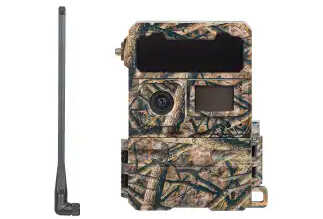
| Hunting | 0.2–0.4s trigger, no-glow IR, camouflage, animal filter | “60MP must be better” — they spec by pixel count |
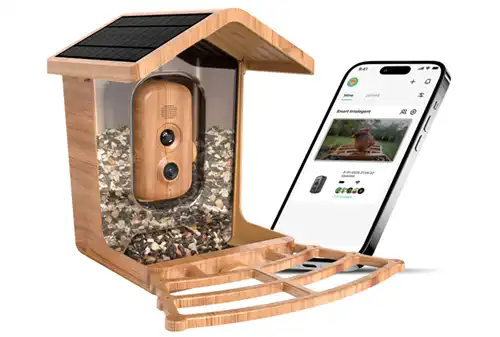
| Birding | Close-focus sharpness, low noise, species AI, feeder cam, app experience | “Just reuse a hunting cam and change the shell” |
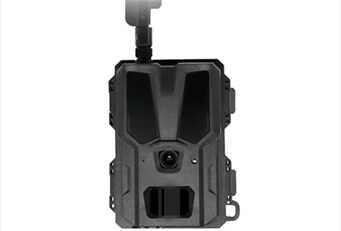
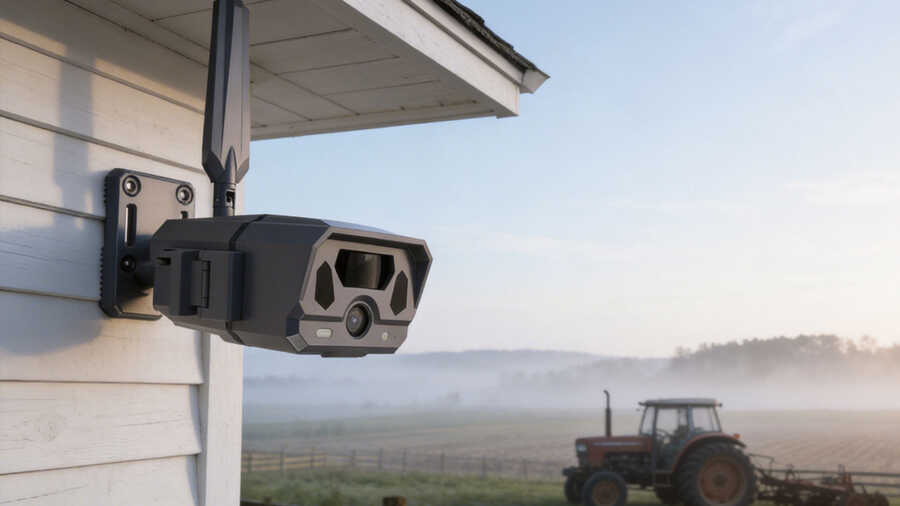
| Off-grid Security | Person/vehicle detection, 4G, solar, theft-proof, evidence timestamp | “Trail cam = 24/7 NVR surveillance camera” |
Hunting: Capture the Deer, Not the Leaves
In hunting, the camera is a scouting tool. The buyer wants to know: What walked the trail at 5:42 a.m.? Was it a shooter buck or a squirrel?
- Trigger speed (0.2–0.4s) freezes a running deer before it exits the frame.
- No-glow IR (940nm) ensures the flash doesn’t spook game — critical for public-land hunting.
- Camouflage housing survives both weather and trespassers.
- Animal filtering separates a whitetail from a swaying branch.
The job isn’t “take a pretty picture.” It’s capture the target animal the moment it crosses the detection zone.
Birding: See the Hummingbird’s Feathers, Not Just “a Bird”
Birding is a different discipline entirely. Subjects are small, fast, close-range, and colorful.
- Close-focus sharpness: A feeder cam needs to resolve detail at 1–3 feet without motion blur.
- Low noise at high shutter speeds: Hummingbirds hover at ~50 wingbeats per second.
- Species AI: European distributors want “great tit,” “kingfisher,” or “robin” tagged — not just “motion detected.”
- App gallery UX: Birders build collections, share sightings, and log species. They’re not checking a lease line; they’re curating a life list.
Reusing a hunting cam with a different shell fails here. A no-glow IR ring tuned for 80ft detection will wash out a cardinal at 18 inches.
Off-Grid Security: People, Vehicles, and Time-Stamped Evidence
This is where most procurement teams misalign. A trail camera is event-driven evidence capture, not a 24/7 continuous recording system.
- Person/vehicle classification: Distinguish between a trespasser and a deer on a rural property.
- 4G/LTE transmission: Push alert images to a phone where no WiFi exists.
- Solar + battery: Operate for months without grid power.
- Theft-proofing: GPS last-known location, lock boxes, tamper alerts.
- Evidence-grade timestamps: Date, time, GPS coordinates — defensible as documentation.
The misconception — “trail cam = security camera” — leads buyers to expect pan/tilt, continuous recording, and real-time two-way talk. When those features don’t exist, the product gets returned.
2. Proving Willfine Value with Data — Not Marketing Claims
B2B buyers are tired of “4K, 60MP, IP66” spec-sheet stuffing. Here’s what actually differentiates a manufacturing partner:
Trigger Capture Rate
| Metric | Willfine | Industry Average |
|---|---|---|
| Hummingbird flight capture rate @ 0.2s setting | 92% | 65–70% |
A 92% capture rate at 0.2s trigger means your birding customers actually get the shot — not three frames of empty branches after the bird has flown.
Battery Tradeoff
| Setting | Relative Standby Power Consumption |
|---|---|
| 0.2s trigger mode | Baseline |
| 0.4s trigger mode | ~18% lower |
For long-term monitoring deployments (wildlife research, perimeter surveillance), the 0.4s setting extends field life measurably without sacrificing practical detection performance.
False Trigger Reduction
For a North American hunting apparel brand, Willfine implemented squirrel/raccoon filtering at the edge. Result: end-user image review time dropped 95%+. Instead of scrolling through 400 photos of swaying grass and chipmunks, the hunter sees 20 relevant deer detections. That’s a retention driver, not a spec-sheet line.
Manufacturing Yield & Delivery
| Metric | Willfine |
|---|---|
| Quality certification | ISO9001 |
| First-inspection yield | ≥99.2% |
| Standard lead time | 15–25 days |
| Complex customization lead time | 30–45 days |
| Monthly production capacity | 300,000 units |
Birding Case Study
A European distributor launched a lightweight 550g birding-specific model with Willfine — optimized close-focus lens, garden-color housing, species-tagging app integration. Result: +60% sales in the premium line within 6 months. No pixel inflation. Just correct product definition.
Compliance Readiness
Willfine operates a pre-certification platform covering FCC / CE / RoHS / REACH. For US/EU brands, this compresses time-to-market and removes the “we didn’t know it needed re-testing” surprise that kills Q4 launches.
3. Procurement Specification Checklists
Stop writing RFQs that say “best trail camera, 4K, cheap.” Here’s what belongs in a specification document:
Hunting Camera RFQ — Must Specify
| Parameter | Why It Matters |
|---|---|
| PIR zones / sensitivity levels | Controls false triggers from heat waves and small animals |
| 850nm vs 940nm IR distance | 850nm = longer range; 940nm = invisible to game |
| Trigger 0.2 / 0.3 / 0.4 adjustability | Tunable per terrain and target species |
| Recovery time | Determines whether camera captures the 2nd and 3rd deer in a group |
| Camo shell / custom menu / date format | Regional hunting regulations and brand differentiation |
| Low-temperature battery solution | -20°C performance for Canadian/Scandinavian seasons |
Birding Camera RFQ — Must Specify
| Parameter | Why It Matters |
|---|---|
| Minimum close-focus distance | Feeder cams need sharp focus at 0.3–1m |
| Daylight color matrix | Accurate species identification requires true-to-life colors |
| Feeder mount structure | Mechanical compatibility with common feeder designs |
| Bird species recognition model (regional) | US species set ≠ European species set |
| App gallery / favorites / species tags | Core to birding community engagement and retention |
Security / Rural Property RFQ — Must Specify
| Parameter | Why It Matters |
|---|---|
| Person/vehicle/animal classification | Reduces false alerts from wildlife in rural settings |
| License plate / face usable distance | Be honest: 30ft recognizable, 15ft identifiable — don’t overpromise 100ft |
| 4G bands (US: B2/B4/B12/B13/B66; EU: B1/B3/B7/B8/B20) | Ensures coverage in deployment region |
| Solar + 18650 runtime model | Calculates maintenance interval for unmanned sites |
| Lock box / GPS / tamper alert | Asset protection in theft-prone areas |
| SD card health warning | Predicts card failure before evidence is lost |
4. Willfine ODM Capability — From End-User Review to Buyer Specification
Reolink’s article on this topic concludes with: “Buy a professional security camera.” That’s a retail answer.
Willfine’s answer is different — and it’s what the search results don’t cover:
You don’t need to sell a camera that looks exactly like GardePro, SpyPoint, or Tactacam. You need a product line engineered for your specific channel, your region, and your customer’s actual use case.
What Willfine Builds for You
| Channel | Willfine Customization Stack | Outcome |
|---|---|---|
| Hunting brands | No-glow IR + animal filtering + regional camo + hunter APP | Lower false captures → higher end-user satisfaction → repeat purchases |
| Birding brands | Feeder cam optics + bird species AI + garden housing + birding APP gallery | Premium positioning, non-commodity pricing, community-driven retention |
| Security distributors | 4G + solar + person/vehicle detection + lock box + private APP + timestamp watermark | Off-grid property, farm, job-site, and cabin channels — high unit economics |
The Specification-First Advantage
Every Willfine engagement starts with scenario definition, not a catalog number:
- What’s the primary use case? (Hunting / Birding / Off-grid security / Hybrid)
- What are the top 3 non-negotiable metrics? (Trigger speed > resolution? Battery life > 4K? Theft-proofing > aesthetics?)
- What’s the target market’s compliance requirement? (FCC/CE, band support, low-temp battery, GDPR for human detection)
From there, we define: hardware layer → firmware layer → software/APP layer → compliance layer → go-to-market packaging.
That’s the gap between end-user review content and buyer specification content. And it’s exactly where Willfine operates.
Ready to Specify Your Next Trail Camera Product Line?
“Trail camera for security” gets searched thousands of times a month. Most of those searchers are consumers. But a portion of them are procurement managers, brand owners, and distributors who need more than “yes, it works.”
They need to know:
- How hunting, birding, and security definitions diverge
- What data proves a manufacturer can deliver
- What to write in an RFQ to avoid returns and clone products
- How to turn a shared hardware platform into three differentiated SKUs
Ready to Inquire?
Fill out the form below to start the conversation. Tell us your scenario, target market, and estimated volume — and our procurement team will respond with a specification framework tailored to your brand.
- >>How Researchers Use 4K Trail Cameras — GPS, Timestamps & Low-Disturbance Monitoring | Field Research Selection Guide
- >>4K Cellular Trail Cameras: The Three Costs Buyers Need to Calculate
- >>4K Birding Cameras & Smart Bird Feeders: Why Buyers Should Look Beyond Resolution
- >>4K Trail Camera Engineering Guide: Sensor Selection, False-Trigger Control & Off-Grid Power (Technical Deep-Dive)
- >>4K Trail Cameras for Hunting and Birding: What Professional Buyers Should Care About Beyond “4K”