
OEM/ODM Trail Camera Guide: Avoid Return Rates, Pixel Inflation & Clone Products
October 27, 2026 ︱ By Willfine
The biggest risk in launching a private-label trail camera, 4G cellular camera, or birding camera isn’t “the factory quoted too high.” It’s 3 months after launch, returns and bad reviews destroy your brand faster than you can restock.
Right now, there are three visible landmines in this industry: clone products, pixel inflation, and hidden return rates. This guide is for brand owners, distributors, and Amazon private-label sellers who want a B2B sourcing checklist that actually protects their business.
1. The Clone Problem: Rebranding a Public Mold Is Not a Product
The playbook of many “cheap factories” is simple:
- Same public mold, different shell color, different silk-screened logo
- Spec sheet copied directly from competitors: “0.1s trigger / 60MP / 4K / 940nm no-glow”
- Stock firmware, third-party white-label cloud app, someone else owns the backend data
On the surface, it looks like “basically the same as GardePro / SPYPOINT, just cheaper.” The real problem:
- “60MP” is interpolated from a 4MP sensor
- “0.1s trigger” is ideal lab data, not real-world continuous performance
- End users get empty-tree photos, visible red glow, can’t connect the app → bad reviews land on YOUR brand name, not the factory’s
Public molds aren’t a sin. But “public mold + inflated specs + zero custom firmware” is a high-risk combination that gets the brand owner blamed.
2. Pixel Inflation: What Buyers Should Reject
The most common sales pitch in the industry:
“This one is 60MP ultra-HD with 4K night vision.”
Here’s what’s actually inside:
- Native sensor is likely 4MP / 8MP
- Outputting 60MP relies on software interpolation
- Interpolation adds zero detail — it just mathematically stretches 4MP of information into a larger file
- Zoom in: soft edges, foliage turns to mush, night shots explode with noise
What buyers should evaluate instead of “max pixel count”:
- Native sensor size (1/1.8″? 1/2.7″?)
- Pixel pitch (larger µm = cleaner low-light performance)
- Dynamic range (backlight, dawn/dusk — does it blow out highlights or crush shadows?)
- Low-light SNR (signal-to-noise ratio)
- Close-range MTF (detail sharpness)
- Real night-shot test: can you ID an animal at 30ft, recognize a face at 15ft?
One rule of thumb:
A native 5MP large-sensor camera beats an interpolated 60MP small-sensor camera in real-world image quality.
Willfine’s sensor selection logic is “scenario-driven, not number-driven”: high-pixel for daytime detail, large-pixel Starvis-class sensors for night/security deployments.
3. Return Rate Comes from These 5 Things (Not “Not Enough Megapixels”)
The real reasons for end-user returns — 90% of them aren’t on the spec sheet:
1. High PIR False-Trigger Rate
Wind-blown branches trigger shots all day — 300 empty-tree photos. → Battery drained, data burned, user thinks the camera is broken.
2. Cold-Weather Battery Collapse
“6-month standby” on the box, but shuts down after 2 weeks at -15°C. → Alkaline battery voltage drop, 18650 low-temp discharge degradation, no BMS cold-weather protection.
3. SD Card Compatibility Issues
Only tested with one specific card brand. User plugs in their own card → lost images / loop-recording failure. → No compatibility list, no bad-block early warning.
4. App Won’t Connect
Pairing flow is user-hostile, QR code expires, public cloud goes down, iOS/Android behavior splits. → For cellular cameras, “experience = app.” A broken app means returns, no matter how good the hardware.
5. Waterproof Seal Aging
After 3 months, the seal deforms. Condensation and water ingress during rainy season. → No long-term aging validation, no sustained IP66 spray testing.
Willfine Reference Data Points (can be written into your procurement spec):
- First-pass yield ≥ 99.2%
- Low-temperature battery solutions customizable: -20°C Li-ion / 18650 / alkaline comparison test packs
- SD card compatibility list: covers major brands across capacity tiers + write-life early warning
- Waterproofing: dynamic temperature-humidity cycling + spray-aging chamber validation
- False triggers: PIR zoning + AI secondary verification, reducing empty shots by up to 80%
4. OEM/ODM Scope: What Actually Needs Customizing (Not Just the Logo)
Many buyers think “ODM = stick a logo on it.” Mature brands need layered customization:
| Layer | Customizable at Willfine |
|---|---|
| Hardware | PIR curve, IR 850/940 combo, solar panel, 4G module, camo/shell, battery compartment, lock box |
| Firmware | Trigger/recovery time, AI classes (person/vehicle/animal/bird), timestamp format, multilingual menu, regional presets |
| Software | Private-label app, species tags, map pins, album management, brand-owned cloud |
| Compliance | FCC / CE-RED / RoHS / REACH, NA/EU frequency bands and regional firmware isolation |
| GTM | Packaging, manual, UPC, listing copy, data plan branding (configurable “no subscription” model) |
Key point: “No subscription” is not a slogan — it means:
- Private app not held hostage by a third-party cloud
- Data plan pricing can be controlled/resold by the brand
- User data stays on the brand’s side, not in a shared factory cloud
5. Buyer Red Flags When Talking to Factories
Ask these questions before sampling. Vague answers = walk away.
🚩 Won’t disclose native sensor model
Says “60MP HD” but won’t name the CMOS manufacturer, sensor size, or pixel pitch.
🚩 Won’t show you the aging room or waterproof test setup
“We have QC” ≠ HALT/HASS, temperature-humidity cycling, and spray-aging data.
🚩 App runs on a shared third-party public cloud
Factory puts 10 clients on one backend. Your brand’s user data is mixed with other brands’.
🚩 “Exactly the same as GardePro / SPYPOINT, just cheaper”
Copycatting isn’t the issue — the issue is they can’t deliver differentiated firmware, so you’re forever stuck in a price war.
🚩 Certificates only, no test reports
Certificates can be bought. Reports can’t be faked. Demand to see the specific model, specific frequency bands, specific sample serial numbers.
🚩 Won’t let you test batch consistency
Beautiful sample, drifting mass production. B2B buyers need “unit #5,000 performs like unit #1,” not “unit #1 is stunning.”
6. Willfine Position: You Don’t Need to Sell Another Camera That “Looks Like Someone Else’s”
You’re building a brand. What you need is channel differentiation, not “a cheaper copy.”
Willfine builds three custom tracks by channel:
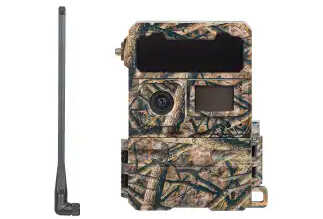
🦌 Hunting Brand Track
- 940nm true no-glow
- Animal filtering (deer/hog/coyote/turkey)
- Regional camo (North American deep woods / European fields / Australian scrub)
- Recovery-time firmware tuned for consecutive herd shots
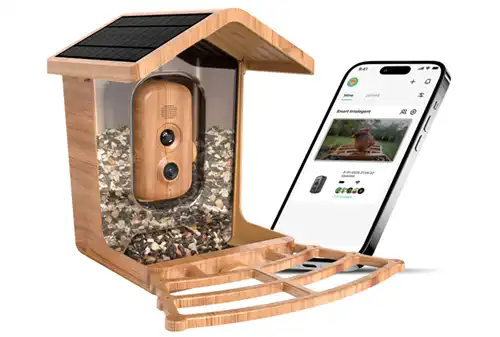
🐦 Birding / Garden Track
- Feeder cam form factor
- Bird AI classification (30+ common species)
- Garden-style shell, fine-grained PIR for small animals
- High daytime frame rate, soft night illumination
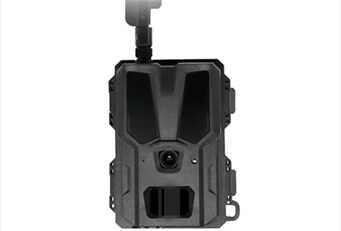
🏚️ Security / Jobsite Track
- 4G + Solar + person/vehicle detection
- Lock box + GPS last-known location + tamper alert
- Private app + white-label backend
- Evidence-grade metadata: timestamp / GPS / temperature / device ID
Pre-Order Checklist: 5 Questions to Ask Before You Commit
Don’t start with “how much per unit.” Start with:
- What’s the native sensor model and pixel count? Interpolated or true sampling?
- What’s the real-world recovery time? Will it drop shots on a 5-frame burst?
- Can the -20°C battery solution run 2+ weeks under high trigger frequency?
- Is the app on a private cloud or shared cloud? Who owns the user data?
- How do you lock consistency between unit #1 and unit #5,000?
The Bottom Line
In the trail camera category, B2B competition doesn’t end at “a better-looking spec sheet.” It ends at:
Lower return rates. Fewer bad reviews. More repeat purchases. Brand equity that stays yours.
Choose the right OEM/ODM partner, and you’re selling a brand. Choose the wrong one, and you’re just helping a factory clear inventory.
Willfine doesn’t make cameras that are “exactly like someone else’s.” We make:
- Cameras hunters keep in their rotation
- Cameras birders proudly post on social media
- Cameras ranchers trust in off-grid, no-power locations
- Cameras where YOUR brand name is on the shell — and you won’t be embarrassed when someone takes it apart
Want me to also produce an English LinkedIn short-post version of this to drive traffic to the full article?
Ready to Inquire?
Fill out the form below to start the conversation. Tell us your scenario, target market, and estimated volume — and our procurement team will respond with a specification framework tailored to your brand.
- >>How Researchers Use 4K Trail Cameras — GPS, Timestamps & Low-Disturbance Monitoring | Field Research Selection Guide
- >>4K Cellular Trail Cameras: The Three Costs Buyers Need to Calculate
- >>4K Birding Cameras & Smart Bird Feeders: Why Buyers Should Look Beyond Resolution
- >>4K Trail Camera Engineering Guide: Sensor Selection, False-Trigger Control & Off-Grid Power (Technical Deep-Dive)
- >>4K Trail Cameras for Hunting and Birding: What Professional Buyers Should Care About Beyond “4K”