How ODM and OEM Make a Difference for Your Trail Camera Business
December 18, 2024 ︱ By Willfine
When expanding your trail camera business or introducing new products, understanding the roles of ODM (Original Design Manufacturer) and OEM (Original Equipment Manufacturer) is essential. In the trail camera industry, these terms are often used differently than in general manufacturing:
- OEM typically refers to private-label production using an existing camera platform with logo, packaging, and minor functional customization.
- ODM means the manufacturer owns the industrial design and core engineering, while your brand defines market positioning and feature priorities.
- Full-spec OEM (your design) is also available at Willfine for brands that provide mechanical, PCB, or cloud-architecture specifications.
To make the right choice, compare how each model affects product performance, lead time, and long-term brand value.
OEM vs ODM: What Actually Changes for a Trail Camera Brand
| Dimension | Pure OEM (Your Design) | Classic ODM (Factory Design) | Willfine Hybrid OEM / ODM |
|---|---|---|---|
| Who Owns the Design | You / your engineer | Willfine R&D | Either – your spec or our proven base models |
| Trigger & PIR Tuning | Your specification | Fixed per base model | 0.2–0.4s trigger, PIR curve configurable |
| IR Wavelength | 850nm / 940nm / dual | 940nm by default | 850nm & 940nm switchable on request |
| Cellular & Cloud | Your module & platform | Factory default | LTE Cat.1/1bis, global bands, OTA, your cloud or ours |
| Edge AI | Your model | None or generic | On-device species recognition, false-trigger filtering |
| MOQ & Lead Time | Higher / 30–60 days | Lower / 7–14 days | ODM logo run 500 pcs / 15–25 days |
| IP & Confidentiality | Full NDA | Factory IP | NDA + per-model IP assignment |
Before finalizing your OEM or ODM requirement sheet, we recommend reviewing Trail Camera Knowledge Hub to understand how trigger speed, IR stealth, and LTE bands directly impact field performance.
1. OEM (Original Equipment Manufacturer) – Customizing Existing Designs
In a typical trail-camera OEM partnership, your business works with a manufacturer that produces products based on an established design. The manufacturer handles production, while your company focuses on branding, packaging, and sometimes minor customization to meet your market needs. These OEM collaboration cameras are sold under your brand, while the core design remains with the manufacturer.
How OEM Benefits Your Trail Camera Business:
- Cost-Efficiency: Lower development costs by leveraging proven platforms.
- Faster Time-to-Market: Launch quickly using existing tooling and firmware.
- Branding Focus: Invest in marketing while manufacturing is handled end-to-end.
- Quality Control: Define key specs such as trigger speed, IR wavelength, and battery configuration.
Best for: Companies looking to scale quickly with minimal design investment.
2. ODM (Original Design Manufacturer) – Creating Market-Specific Products
In an ODM partnership, the manufacturer owns the industrial design and core engineering, while your brand defines feature priorities, app experience, and market positioning. This allows you to launch differentiated products without maintaining an in-house hardware team.
How ODM Benefits Your Trail Camera Business:
- Tailored Design: Choose housing, UI language, and feature sets aligned with your market.
- Innovation: Integrate LTE connectivity, Edge AI, or solar-hybrid power systems.
- Full Control: Influence PIR sensitivity, IR output, and firmware behavior.
- Long-Term Value: Build exclusive SKUs that strengthen brand loyalty.
Best for: Brands aiming to differentiate through exclusive hardware and long-term product strategy.
Which Model Should You Choose for Your Trail Camera Business?
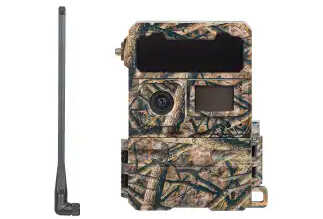
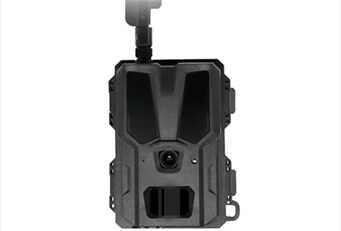
- Choose OEM if your priority is speed and cost-efficiency using proven platforms such as TANK200, TA200S, or T4.0-CS.
- Choose ODM if you want exclusive designs, deeper customization, or integration of advanced features such as Edge AI and LTE cloud sync.
Not sure which configuration fits your market? The Trail Camera Knowledge Hub breaks down PIR geometry, IR stealth, LTE bands, and SD-vs-cloud fleet costs to help you finalize your specification sheet.
Founded in 2004, Willfine delivers an annual production capacity of 3 million+ units, backed by a 100+ R&D team, 28 property rights, and 30+ AI breakthroughs, serving clients in 80+ countries. We provide both ODM and OEM solutions — from logo-customized trail cameras to fully specified OEM designs — ensuring your product line matches your brand strategy and market requirements.
CONTACT US FOR OEM/ODM CAMERAS
Tell us your target market, required quantity and customization level — we’ll respond within 1 business hour with a tailored quotation.
- >>How Researchers Use 4K Trail Cameras — GPS, Timestamps & Low-Disturbance Monitoring | Field Research Selection Guide
- >>4K Cellular Trail Cameras: The Three Costs Buyers Need to Calculate
- >>4K Birding Cameras & Smart Bird Feeders: Why Buyers Should Look Beyond Resolution
- >>4K Trail Camera Engineering Guide: Sensor Selection, False-Trigger Control & Off-Grid Power (Technical Deep-Dive)
- >>4K Trail Cameras for Hunting and Birding: What Professional Buyers Should Care About Beyond “4K”