Guide to Adjusting PIR Sensitivity on Trail Cameras
May 8, 2025 ︱ By Kira
1. Introduction: What Is PIR and Why It Matters in Outdoor Monitoring
Passive Infrared (PIR) sensors are the backbone of motion detection in trail cameras. By sensing changes in infrared radiation—typically emitted by warm bodies such as animals or humans—PIR sensors trigger the camera to capture images or start recording. In outdoor surveillance, wildlife observation, or property monitoring, the effectiveness of a trail camera heavily depends on the performance and precision of its PIR system.

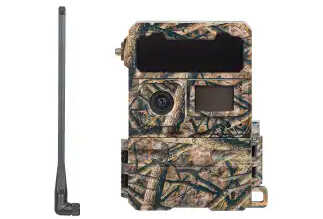
For professional users and outdoor gear retailers, selecting a trail camera with superior PIR sensitivity isn’t just a feature—it’s a necessity. The Willfine TANK200 4G Trail Camera is Willfine’s AI-powered cellular model built for OEM/ODM customization, combining 5MP native capture with server-side AI upscaling to 2K, 0.4s trigger out of the box (tunable to 0.2s hardware limit under ODM), and remote fleet management. Its Edge-AI-filtered PIR system ensures optimal performance across varied conditions, making it a top choice for both enterprise clients and serious field users.
If you’re deploying 50+ units across mixed terrain, standard 3-level presets often force a compromise between missed targets and false-trigger floods—and every false trigger burns 4G data plus a battery cycle. At 200 nodes, that’s not a setting; it’s a quarterly OPEX line. We’ll show where Tank200’s defaults stop—and where ODM tuning takes over.
2. Understanding PIR Sensitivity: Precision Makes the Difference
PIR sensitivity refers to how responsive a trail camera is to motion in its detection zone. High sensitivity allows the camera to detect smaller or more distant movements, while lower sensitivity is useful in windy areas or environments prone to false triggers.
Key Impacts:- High Sensitivity: Captures distant or subtle movements but may trigger from leaves or small animals.
- Low Sensitivity: Reduces false triggers but may miss faster or smaller animals.
- Balanced Sensitivity: Ideal for dynamic environments such as forests, fields, or open trails.
Choosing the right level of PIR sensitivity is crucial to avoiding memory overload, battery drain, or missing valuable footage.

3. Step-by-Step Guide to Adjusting PIR Sensitivity on TANK200
Adjusting PIR sensitivity on the Willfine TANK200 4G Trail Camera is quick and intuitive thanks to its user-friendly interface. Here’s how:
- Access Camera Settings: Use the camera screen or mobile app (via 4G connectivity) to enter the settings menu.
- Navigate to PIR Settings: Look for the “PIR Sensitivity” option—usually under motion detection or trigger settings.
- Choose Sensitivity Level: Tank200 ships with standard 3-level (Low / Medium / High) control; under ODM the same logic expands to 5-level fine tuning with a continuous parametric calibration interface.
- Use High in wide-open fields.
- Use Medium in balanced environments.
- Use Low in busy, windy, or high-traffic areas.
- Test & Adjust: After setting the sensitivity, test the camera to evaluate performance. Make adjustments as needed based on false triggers or missed footage.
- Pro Tip: Tank200’s on-chip Edge-AI analyzes movement patterns and environmental context, blocking up to 99% of false alarms (wind, leaves, heat shimmer) before they ever hit the 4G uplink—so sensitivity tuning becomes refinement, not firefighting.
Running cameras across a humid lowland AND a dry reflective ridge? A single Medium preset can’t serve both—you’ll miss on one side and drown in false triggers on the other. And every false trigger burns 4G data plus a battery cycle; at 200 nodes, that’s a quarterly OPEX line, not a settings tweak. See how ODM PIR-curve tuning solves this below, or keep reading for the Tank200 spec breakdown.
4. Why Choose the Willfine TANK200 4G Trail Camera?
When it comes to balancing sensitivity, performance, and usability, the TANK200 4G Trail Camera is engineered for B2B fleets. Specs below split into standard delivery and ODM-extendable scope:
Standard spec (off-the-shelf TANK200):
- ✅ Edge-AI PIR Filtering — on-chip human / vehicle / game classification, blocks 99% of false alarms, cuts 4G data bills and battery swaps.
- ✅ 5MP Native (3072×1728) + Server-Side 2K Upscale — 1080P H.265 video locally, AI super-resolution to 2K FHD on the backend for forensic clarity at low transmit cost.
- ✅ 0.4s Trigger (0.2s under ODM) — 48° detection envelope, 20m max PIR radius; burst 1P/2P/3P traps.
- ✅ 54pcs 940nm No-Glow IR — invisible night illumination, zero disturbance to wildlife or reveal of node position.
- ✅ 4G LTE Cat.1 + OTA — multi-band across 100+ networks, remote batch firmware, no manual SD retrieval.
- ✅ 8×AA or Solar, 6-Month Standby — IP66, -20°C~55°C, external 12V/2A DC option.
ODM-extendable scope:
- ✅ Trigger-speed profiles — 0.2s / 0.4s selectable curves per deployment zone.
- ✅ PIR sensitivity — 5-level fine tuning with continuous parametric calibration interface (vs standard 3-level).
- ✅ Detection radius — tunable to 25m.
- ✅ SDK/API, white-label app & cloud, housing & firmware co-development, solar + steel-lock enclosures.
➡ Full specs & bulk inquiry: TANK200 Product Page

Before locking your spec, see how PIR sensitivity, trigger speed, and IR choice interact across Willfine’s lineup in the Trail Camera Knowledge Hub—so you can brief our engineering team with precision.
5. Conclusion: Maximize Performance Through Smart Sensitivity Adjustment
PIR sensitivity is not just a setting—it’s the key to maximizing the efficiency of your trail camera system. By understanding how to properly adjust sensitivity for different environments, users minimize false triggers, conserve battery life, and capture relevant footage.
With the Willfine TANK200 4G Trail Camera, you’re not just buying hardware—you’re deploying an Edge-AI-filtered, 0.4s-class trigger (0.2s via ODM), 4G-managed detection node that meets modern outdoor surveillance and ecological monitoring demands. If your deployment spans 50+ nodes or mixes forest and security corridors, the preset stops where ODM starts.
📩 Ready to spec TANK200 for your deployment? Tell us your environment mix (forest / open / security corridor), target species or intrusion profile, camera count, and whether you need white-label app + SDK integration. Our engineering team responds within one business day with a tailored OEM/ODM configuration—from PIR curve to firmware. Jump to the inquiry form below, or start with the Trail Camera Knowledge Hub.
Willfine (est. 2004) delivers an annual production capacity of 3 million+ units, backed by a 100+ R&D team, 28 property rights, and 30+ AI breakthroughs, serving clients in 80+ countries—full chain from PIR element selection to firmware and OTA.
CONTACT US FOR OEM/ODM CAMERAS
Tell us your target market, required quantity and customization level — we’ll respond within 1 business hour with a tailored quotation.
- >>G100 RV Dealership Perimeter Plan | 4G Off-Grid Security Camera for RV Lots
- >>White-Label 4G Off-Grid Cameras vs Consumer RV Cameras for Rental Fleets
- >>How to Choose a Trail Camera Lens? Focal Length, FOV & Real-World Scenarios Explained
- >>Buyer's Factory Audit Manual: How to Audit a Chinese Trail Camera OEM/ODM Factory
- >>SPYPOINT / Moultrie / Bushnell / Browning vs. Willfine: Trail Camera Architecture Teardown for OEM Buyers