From 2G/3G Standalone to 4G + Solar + Edge AI: The 2027 Trail Camera OEM Migration Roadmap
September 22, 2026 ︱ By Willfine
Abstract / Executive Summary
Over the past decade, the North American and European trail camera market has run on a stable, predictable technology stack: an SD card, a PIR sensor, eight AA batteries, and the quiet assumption that “the network will always be there.” That assumption died in 2022.
Major U.S. carriers have fully decommissioned their 2G/3G networks. Europe is following a phased, country-by-operator withdrawal. For brand owners still holding 2G/3G cellular SKUs, this is not a future risk — it is a present-day inventory problem. For buyers still sourcing from suppliers who only offer SD-card standalone units, this is a product roadmap problem.
By 2027, the bar has moved again: 4G is no longer a premium feature — it is the entry ticket. Solar is a hard requirement for field deployment. Edge AI is the differentiator buyers use to defend margin.
This guide is written for the product manager, brand owner, or purchasing lead staring at an aging BOM and asking the only question that truly matters: “What do I replace it with, and what will this switch actually cost me?”
1. Three Ways a Legacy Trail Camera Dies
Before discussing replacements, it is worth being precise about what is already broken. Legacy units fail in three distinct ways — only one of which is visible to the end customer on day one.
| # | Failure Mode | Visibility | Mechanism | Consequence |
|---|---|---|---|---|
| 1 | The network kills it | Immediate, post-activation | A 2G/3G cellular camera that cannot attach to a tower is a brick with a lens. It looks identical to a working unit on the shelf. | Returns begin after the customer activates the SIM. |
| 2 | Software buries the user in noise | Gradual, post-deployment | Traditional PIR cannot distinguish a whitetail from a cottonwood branch in 30 km/h crosswinds. Everything triggers the shutter. | The customer’s image feed fills with empty frames. They stop opening the app. The hardware loses its reason to exist. |
| 3 | The channel quietly stops ordering | Slow, strategic | The product still works. A few units still sell. But retailers have moved shelf space to a competitor’s 4G AI SKU because that is what walk-in customers are asking for. | Six months later, the buyer realizes the line is dead and inventory becomes stranded cost. |
A real migration project must address all three. Replacing only the modem fixes only the first.
2. The 2027 Replacement Matrix
The single biggest mistake in a platform migration is copying the old BOM and asking a new factory to build it cheaper. The old BOM was designed for a market that no longer exists. The correct approach is to start from the use case and work backward.
| Legacy Configuration | 2027 Replacement | Module Specs / Chip Level (General Tech Stack) | What the Buyer Gains | What to Watch |
|---|---|---|---|---|
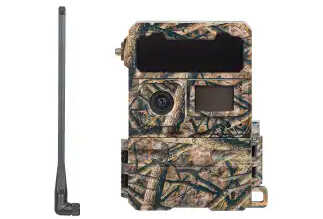
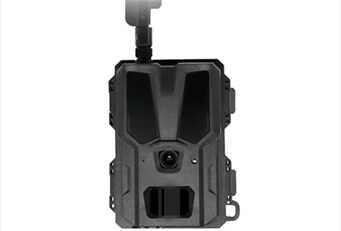
| SD card + AA battery + passive PIR | TA100S-class 4G LTE Edge AI | LTE Cat.1bis (single-antenna ultra-cost) + low-power embedded MCU | Real-time scouting, 30+ species recognition, ~30% lower power draw, 5×5 detection grid | App ecosystem ownership — who controls the customer relationship |
| 2G/3G cellular + cloud AI filtering | TA200S-class chip-level Edge AI | LTE Cat.1 / Cat.1bis + SoC embedded NPU (edge compute class) | AI runs on-camera; non-target movement never touches the SIM card; data traffic reduced by 90%+* | LTE Cat.1 / Cat.1bis band coverage for target market (US SKU vs. EU SKU) |
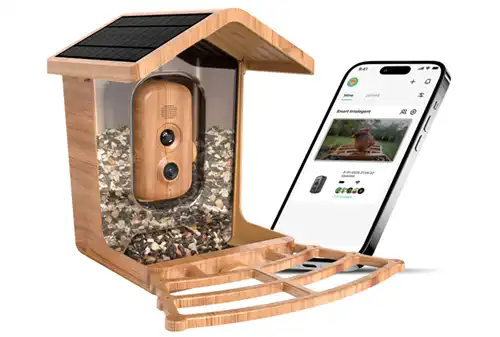
| Solar panel bolted onto non-low-power chassis | Native low-power + solar platform | PMIC native low-power management + proprietary low-light / compact solar charge-discharge architecture | Months of maintenance-free operation; viable off-grid deployment | Solar panel specs and charge controller efficiency — not just “solar compatible” |
The pattern is consistent: migration is not a component swap. It is a shift from “capture everything” to “transmit only what matters.” This single architectural change is where the upgrade cost is recovered — in SIM fees, in battery life, and in customer attention.
3. The Real Cost of Migration
This is the section most suppliers will not show you. A platform switch involves six cost lines — four of which have nothing to do with unit price.
| Cost Line | What It Covers | The Question to Ask |
|---|---|---|
| NRE (Non-Recurring Engineering) | Engineering development, firmware adaptation, certification prep | Is NRE a one-time investment or a recurring fee per revision? |
| Tooling | Housing molds, jigs, custom structures | Who owns the molds, and what happens if you change suppliers? |
| Certification | FCC / CE / RoHS documentation | Are full technical files delivered, or just the certificates? |
| App & Cloud | White-label app, server infrastructure, data routing | Is the app white-labeled under your brand, and where is the data stored? [For EU customers, GDPR data path must be explicitly defined] |
| Data Plans | SIM provisioning, per-unit traffic | Is a managed data plan provided, or does the customer source separately? |
| Lead Time | Prototyping to mass production | 15–25 days is a manufacturing window, not the total project timeline. |
The unit-price delta between an old SD-card camera and a new 4G AI unit is the smallest number in this table. Buyers who lose money on migration are the ones who budgeted only for that line.
4. The Mathematical Logic of Edge AI: Why 100 Local Inferences Cost Less Than 1 Upload
This is the most persuasive technical anchor in the entire migration argument, and it is worth understanding in detail.
Academic and institutional field data:
WWF (World Wide Fund for Nature) & Wildlabs.net — Camera Trapping Hardware & AI Benchmark Reports: Field data shows that false-empty frames from traditional PIR triggers typically account for 70%–95% of all captures, driven by swaying branches, ground heat haze, and strong sunlight fluctuations.
Chip vendor whitepapers and test data:
UNISOC / Quectel / Espressif Low-Power Edge Vision Whitepapers: When launching Cat.1 + NPU vision solutions, these vendors provide compute-power ratios (mA/frame). Data shows: the energy consumed by one on-device AI inference (<100 ms) is only 1/15 to 1/20 of the energy required to wake the 4G module, establish a TCP/IP handshake, and upload a 2 MB image.
Industry-accepted engineering logic (compute trades for traffic / battery):
| Parameter | Cellular RF Power (TX) | Edge Compute Power (NPU Inference) |
|---|---|---|
| Power draw | 200 mA – 500 mA (forest, weak signal, 3–5 sec) | 20 mA – 50 mA (<100 ms per inference) |
| What it does | Wakes modem, negotiates network, uploads image | Runs lightweight YOLO / MobileNet on embedded NPU |
| Energy cost | High — sustained transmission | Low — burst compute, then sleep |
Conclusion: “The power consumed by 100 local inferences is less than the power required to upload 1 image.” This is the underlying mathematical logic for how edge AI reduces power consumption by ~70% and slashes data traffic by 85%+.
5. Migration Checklist
Answer these in writing before issuing the RFQ:
- [ ] Which carriers and which frequency bands does my target market actually use? [To be verified: list specific bands by target sales country]
- [ ] Is the replacement for a feeder site, a hunting blind, a ranch perimeter, or a backyard? The answer determines the spec.
- [ ] Do I need my own branded app, or can I accept the supplier’s app?
- [ ] Who owns the molds, the firmware, and the certification files?
- [ ] What is the acceptable false-trigger rate for my use case?
- [ ] Before committing to volume, have I run a sample unit on my own property for at least 30 days?
The last item is not optional. Every brand that has been burned by a supplier made the same error: they signed the spec sheet without running the hardware through a winter.
Appendix A: Global Carrier 2G/3G Sunset Schedule
[To be verified: recommend adding an “Operator × Country × Shutdown Year” reference table with links to official announcements, avoiding vague statements.]
North America has completed 2G/3G sunset. Europe is adopting a “3G first, 2G retained for IoT / legacy voice, but fully phased out 2026–2030” strategy. For products shipping to North America and Europe in 2027, continuing to use 2G/3G modules carries direct risk of no-network-available or high roaming costs. LTE Cat.1 / Cat.1bis is the only viable baseline for cross-border deployment.
| Region / Country | Operator | Network | Sunset Date | Official Reference |
|---|---|---|---|---|
| USA | AT&T | 2G GSM / 3G WCDMA | 2G: 2017 / 3G: Feb 2022 | [AT&T Network Evolution Statement] |
| USA | Verizon | 2G/3G CDMA | Dec 2022 | [Verizon 3G CDMA Network Decommission Notice] |
| USA | T-Mobile | 3G UMTS / 2G GSM | 3G: Jul 2022 / 2G: Aug 2026 | [T-Mobile Network Evolution Policy] |
| UK | Vodafone / EE / O2 | 3G / 2G | 3G: completed 2024 / 2G: by 2030 | [UK DCMS (GOV.UK) Switch-off Agreement] |
| Germany | Telekom / Vodafone | 3G / 2G | 3G: shut 2021 / 2G: 2028–2030 | [Federal Network Agency (BNetzA)] |
| France | Orange / SFR / Bouygues | 2G / 3G | 2G: end of 2026 / 3G: 2028–2029 | [Orange Telecom Network Sunset Roadmap] |
Appendix B: References & Data Sources
- WWF & Wildlabs.net — Camera Trapping Hardware & AI Benchmark Reports (false-empty frame rates 70%–95%)
- UNISOC — Low-Power Edge Vision Whitepapers (Cat.1 + NPU solutions, mA/frame metrics)
- Quectel — Low-Power Edge Vision Whitepapers (compute-power ratios)
- Espressif — Low-Power Edge Vision Whitepapers (embedded NPU inference benchmarks)
- Carrier sunset announcements: AT&T, Verizon, T-Mobile, UK DCMS, BNetzA, Orange (see Appendix A for links)
CONTACT US FOR OEM/ODM CAMERAS
- >>G100 RV Dealership Perimeter Plan | 4G Off-Grid Security Camera for RV Lots
- >>White-Label 4G Off-Grid Cameras vs Consumer RV Cameras for Rental Fleets
- >>How to Choose a Trail Camera Lens? Focal Length, FOV & Real-World Scenarios Explained
- >>Buyer's Factory Audit Manual: How to Audit a Chinese Trail Camera OEM/ODM Factory
- >>SPYPOINT / Moultrie / Bushnell / Browning vs. Willfine: Trail Camera Architecture Teardown for OEM Buyers